
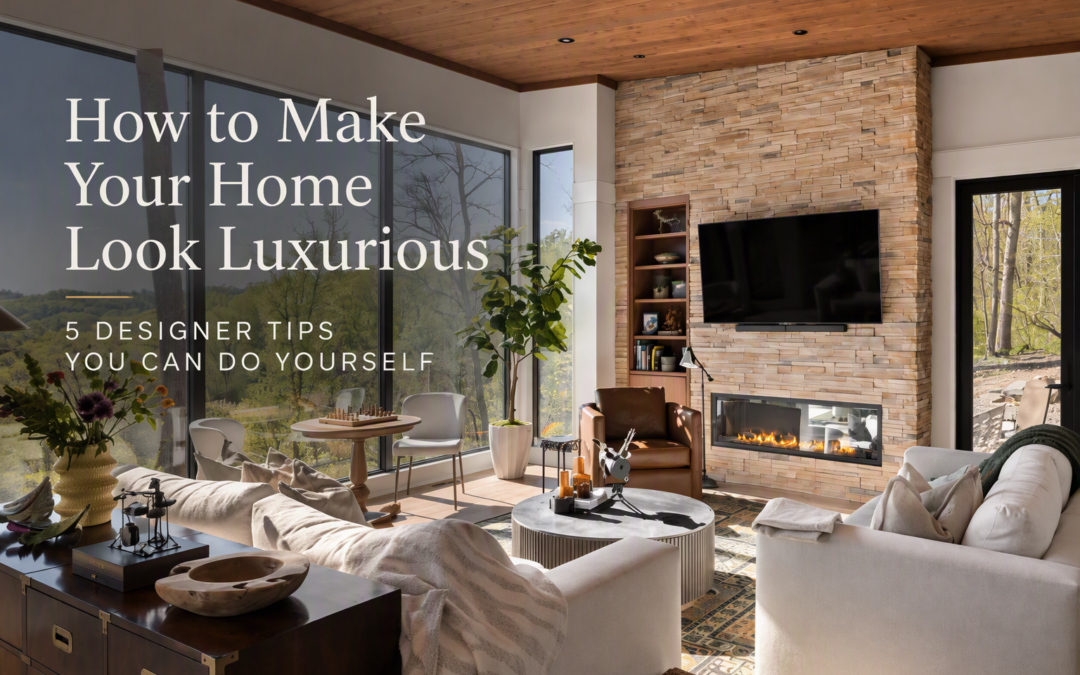
How to Make Your Home Look Luxurious: 5 Designer Tips You Can Do Yourself
You’ve felt it the moment you walked into a beautifully designed room — that quiet sense that everything simply belongs. Here’s the secret most people miss: that feeling comes less from what things cost than from knowing which moves to make. The good news? Making your home look luxurious is well within reach.
Luxury isn’t only about how much you spend — it’s about the choices you make. Where you put the light, how things are scaled, the textures you reach out and touch. Get those right and even a modest space can feel rich, considered, and calm. Get them wrong and the most expensive furniture in the world still feels off.
These are five of the moves designers reach for again and again to make a home look high-end — and every one of them is something you can put to work yourself.
1. Bring in Greenery That Never Wilts
Plants make a space feel alive, but not everyone has the light or the time to keep them thriving. High-quality faux greenery has come a long way — the best pieces are genuinely hard to tell from the real thing. Go for statement pieces in living areas, like a faux fiddle leaf fig or a tall palm, and smaller, finely detailed succulents for shelves and tabletops. Placed with intention rather than scattered, greenery makes a room feel lush, curated, and well cared for.
2. Let Lighting Do the Heavy Lifting
If you change only one thing, change the lighting. Nothing transforms a room faster — or fakes luxury more convincingly. The trick is layering: ambient light to fill the room, task light where you work, and accent light to draw the eye. A chandelier, a sculptural pendant, or a pair of floor lamps can act as a focal point while doing their actual job. Add dimmers everywhere you can; the ability to drop a room from bright to candlelit is the difference between a space that’s lit and one that has a mood. Good lighting makes even modest rooms feel opulent.
3. Choose Textiles You Want to Touch
Luxury is tactile. The fastest way to make a room feel expensive is to fill it with materials that feel as good as they look — velvet, silk, high-thread-count cotton, a richly textured wool rug. Layer them: plush bedding and fine linens in the bedroom, weighty drapes and a soft throw in the living room. Stick to timeless fabrics over trendy ones and they’ll still feel rich years from now. The eye notices the color, but it’s the touch that makes a space feel indulgent.
4. Get the Scale Right
This is the one most people get wrong, and it’s the one a designer’s eye catches instantly. Furniture that’s too small leaves a room feeling sparse; too large and it feels crowded and clumsy. Everything should be proportionate to the space — generous sofas and a grand coffee table in a large open room, streamlined pieces in a smaller one. Balance matters too: pair something heavy and ornate, like a substantial mirror, with lighter, simpler pieces so the room feels composed rather than lopsided. When the scale is right, a room looks designed even before you’ve added a single accent.
5. Finish With the Right Details
The final 5% is where luxury lives. Thoughtful accents — brass or gold hardware, an elegant vase, a beautiful tray, a piece of art that stops you for a second — give a room its sense of polish. Mirrors add light and depth. The key is restraint: each piece should earn its place and reflect your style without crowding the room. A few considered details read as luxury. Too many read as clutter.
The Thread That Makes a Home Look Luxurious
Making a home look luxurious isn’t about spending the most — it’s about choosing well. Living greenery, layered lighting, textiles you love to touch, the right scale, and a few perfect finishing details will take almost any space further than expensive pieces chosen carelessly ever could. And every one of these is something you can start on this weekend.
That said, the choices that look effortless are often the hardest to make on your own — especially scale, and knowing when to stop. That’s the part we love. If you’d rather not guess your way through it, a designer who takes the time to understand your home and how you live in it can help you land that high-end feeling with confidence — and skip the expensive mistakes along the way.