Who to Hire First: The Interior Designer or the Contractor? Understanding the Roles in a Renovation Project
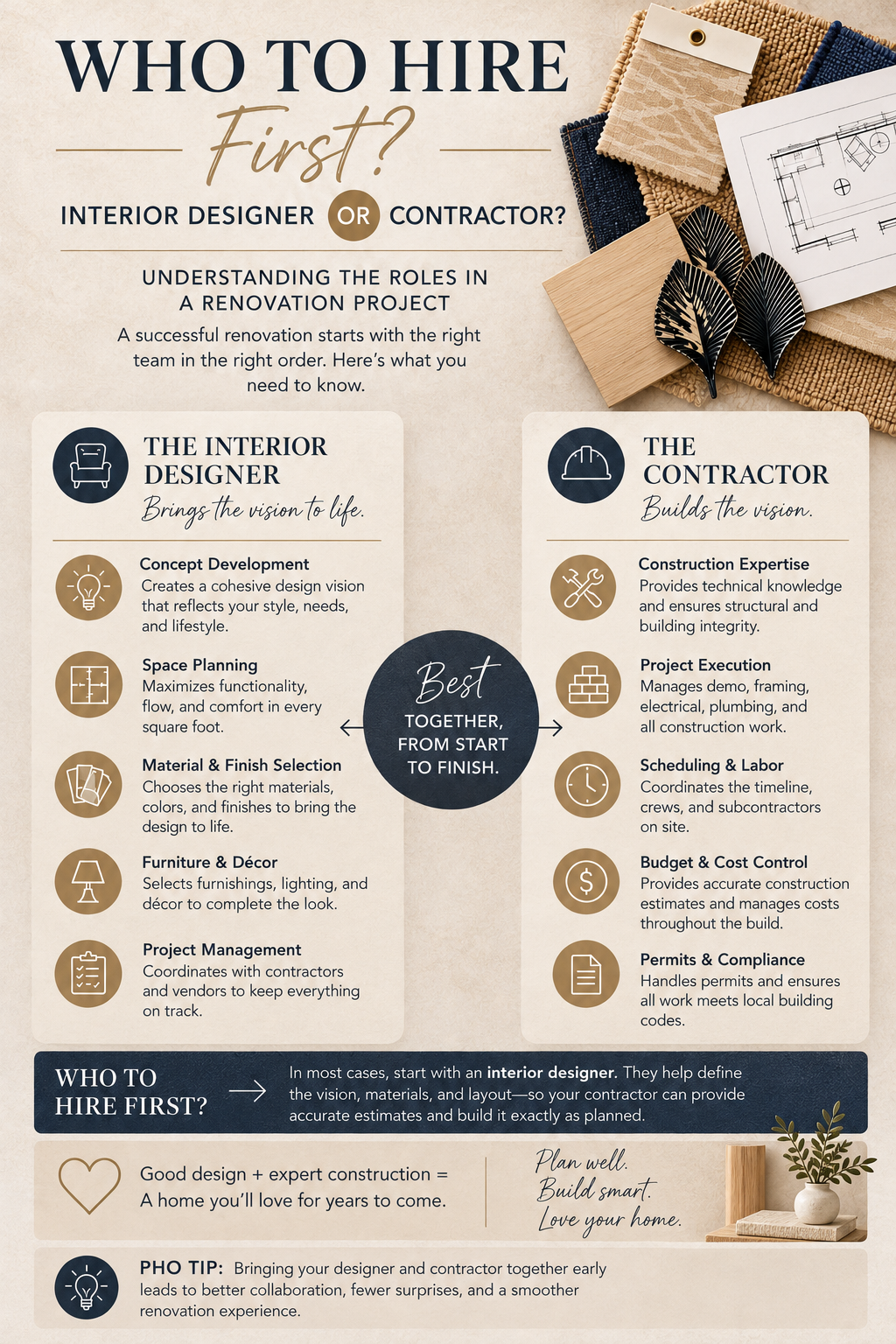
Renovating a home is an exciting yet complex endeavor that requires careful planning and coordination. One common question homeowners face is whether to hire an interior designer or a contractor first. Both professionals play crucial roles in the renovation process, and understanding their distinct functions can help ensure a smooth and successful project. Here’s a look at the responsibilities of each and advice on how to decide who to bring on board first.
The Role of the Interior Designer
An interior designer is responsible for the aesthetic and functional aspects of your renovation. They focus on creating spaces that are not only beautiful but also practical and suited to your lifestyle. Here are some key tasks an interior designer handles:
- Concept Development: Interior designers help you develop a vision for your space. They translate your ideas, preferences, and lifestyle needs into a cohesive design plan — including layout, color palettes, materials, furnishings, and lighting.
- Space Planning: Beyond aesthetics, designers think critically about how a space will function. They consider traffic flow, furniture placement, and how each room connects to the next to ensure the home works as well as it looks.
- Material and Finish Selection: From flooring and cabinetry to countertops and hardware, interior designers help you navigate the overwhelming number of choices available, keeping your budget and overall vision in mind.
- Vendor and Product Sourcing: Designers often have access to trade-only showrooms and vendors, giving you access to products and pricing that aren’t always available to the general public.
- Project Coordination: Many interior designers act as a liaison between you and your contractor, ensuring that the design intent is executed correctly and that decisions are made efficiently throughout the build.
The Role of the Contractor
A general contractor manages the physical construction and renovation work. While designers focus on the vision, contractors focus on execution. Their responsibilities typically include:
- Structural and Building Work: Contractors oversee all construction tasks — framing, plumbing, electrical, drywall, flooring installation, and more. They ensure work is completed safely and up to code.
- Subcontractor Management: General contractors hire and coordinate the specialized tradespeople needed for your project, such as electricians, plumbers, and tile setters.
- Permits and Inspections: A licensed contractor handles the necessary building permits and coordinates required inspections, keeping your project legally compliant.
- Budget and Timeline Management: Contractors provide detailed estimates and work to keep the project on schedule and within the agreed-upon budget.
- Problem Solving on the Job Site: Renovations rarely go exactly as planned. Contractors address unexpected issues — such as hidden water damage or structural surprises — and find solutions that keep the project moving forward.
So, Who Should You Hire First?
In most cases, hiring an interior designer first is the smarter move — especially for whole-home renovations or projects that involve significant layout changes.
Here’s why: a designer helps you define exactly what you want before any work begins. When you bring a contractor in after the design plan is in place, they can provide a far more accurate bid based on specific materials, layouts, and finishes. Without a clear design direction, contractors are essentially estimating a moving target, which can lead to costly change orders down the line.
That said, there are situations where it makes sense to consult a contractor early — or even first:
- Structural concerns: If your project involves removing walls, adding square footage, or working around complex systems like HVAC or plumbing, a contractor’s input early on can inform what’s feasible before a designer invests too much time in a plan that may not be buildable.
- Budget reality checks: Contractors can quickly tell you what things actually cost to build in your area. Getting a ballpark early helps you and your designer make smarter decisions about where to splurge and where to save.
- Smaller projects: For a straightforward bathroom update or kitchen refresh that doesn’t require major layout changes, you may not need an interior designer at all — a contractor can get the job done with your direct input.
The Best Approach: A Collaborative Team
The most successful renovations happen when the interior designer and contractor work together as a team, with you as the decision-maker. Ideally, once you’ve hired your designer and developed a solid concept, bring your contractor in early enough that they can weigh in on feasibility before the design is fully finalized. This collaborative approach reduces surprises, keeps costs in check, and ensures that what ends up on paper can actually be built.
The bottom line: start with your vision, then build your team around it. Hire the designer to define the dream, and bring in the contractor to make it a reality.